Apr 16, 2025 in Research
Why We Invested in Optimum: Rethinking Blockchain Memory for Web3 Scale
Author: Aryan S.
Memory is a significant and often overlooked bottleneck in blockchains today.
Blockchains must handle growing volumes of state (i.e., the data that reflects all current account balances, contract variables, etc.), which rapidly grows as accounts and contracts are created. But today’s networks still treat storage like a static ledger. They store dynamic state in rigid formats like archived blocks or disk-based trees, which aren’t performance-oriented.
This mismatch slows node sync and communication and raises the barrier to participation. More hardware is required to keep up, increasing centralization risks. Optimum rethinks this model. It introduces a high-performance memory layer for the modular blockchain stack—purpose-built for fast, dynamic access to state at scale. We believe it’s the first credible approach to solving blockchain’s memory problem. That’s why we invested.
The Problem: Static Memory in a Dynamic World
Generally, blockchains require every full node to store the entire state of the network, meaning all account balances, contract data, etc., must be updated by every node, every block. Importantly, this data is stored as a static dataset, meaning that storage requirements grow at the same rate as the network’s state expands. Storing this dynamic, constantly updating data in static formats (e.g. disk-based Merkle trees or archived blocks) is inherently inefficient. It’s like trying to run modern software off a floppy disk.

The result is well observed today, in state bloat. Chains grow heavier and harder to sync. New nodes take hours or days to join. The cost of reading or writing state increases. And as the bandwidth and hardware requirements rise to keep up with state, fewer people can run nodes, creating centralization risk.
The solution used to be to just throw more hardware at the problem, but Moore’s law, the observation that computing power roughly doubles every two years, is slowing. More disk space and bandwidth may offer short-term relief but to solve the root issue we need a smarter way to think about memory itself in the blockchain stack.
Optimum’s Vision: Blockchain Memory, Reinvented
Optimum is building the memory layer for the blockchain world computer.
It introduces a high-performance, network-coded transport and storage layer that acts like a decentralized memory bus and RAM (deRAM). Unlike traditional disk-based blockchain memory, Optimum provides fast, dynamic access to state and block data consistently as the network scales.
At the heart of Optimum is a breakthrough called Random Linear Network Coding (RLNC), a branch of erasure coding, developed over the past 15 years at MIT by co-founder Professor Muriel Médard. Rather than sending raw data across the network, RLNC encodes data into mathematical fragments. Any node can reconstruct the original data after receiving a sufficient number of fragments, even if they didn’t come from the same source or arrive in the right order.
In a recent interview with CoinTelegraph, Muriel used an analogy for RLNC that resonated with us.
“[RLNC is like] breaking a puzzle into small pieces, mixing those pieces together into equations, and sending them to your friends.”
“Even if a few pieces get lost, your friends can still put the whole puzzle together from the pieces they receive. Rather than look for specific pieces, you look for just enough pieces,”
This makes data propagation radically more efficient and resilient. Instead of broadcasting full blocks or state chunks redundantly, nodes share coded pieces. There’s less wasted bandwidth, faster syncing, and far more robustness against packet loss or latency.
This is Optimum’s first product – OptimumP2P. Above this P2P coded layer, Optimum is building the DeRAM system, a decentralized, random-access memory system. DeRAM functions like RAM in a computer, acting as a fast-access buffer where any node or smart contract can request recent state or data. Together, these components transform how blockchains store and access memory.
DeRAM: RAM for the World Computer
We think the right way to understand Optimum is to think in terms of traditional computing. If Ethereum and other blockchains are world computers, where is the RAM?
Well, as discussed above, today there isn’t any. Everything is written to a slow hard drive.
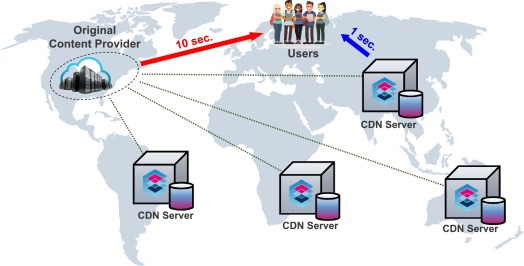
Optimum changes that. It introduces a high-speed memory layer that lets blockchains act like real computers: fast, dynamic, and elastic. Nodes don’t need to hold everything, rather just enough to contribute to the network, and the rest can be fetched in real time from the coded memory fabric. It’s akin to how content delivery networks revolutionized the web by enabling data to be fetched on demand, instead of every server holding everything.
Why Now: Timing and Infrastructure Maturity
We also think that the timing of Optimum’s arrival coincides with a broader shift in the blockchain landscape, the maturation of the modular stack. The stack is becoming increasingly separated into distinct layers, execution, consensus, and things like data availability no longer have dependencies on each other. Rollups can publish transaction data blobs to Celestia or EigenDA as an example. Light clients fetch proofs dynamically. Bridges link chains. But memory is missing.
Optimum can slot into the same modular stack as a memory abstraction layer, allowing L1/L2s to sync faster, light clients to validate more effectively, and DA layers to distribute data more efficiently. It slots in perfectly as a horizontal layer – broadly useful and importantly, chain agnostic.
The Team
What makes Optimum stand out is not just the idea, but the caliber of the team.
Professor Muriel Médard, Optimum’s co-founder & CEO is a pioneer of modern network coding, and a great scientist in the area of communication and information theory. Her work underpins key parts of 5G, satellite communications, and high-throughput wireless systems. Her co-founder, Dr. Kishori Konwar, is an expert in distributed systems and previously worked at Meta. And Kent Lin, the company’s COO, brings deep experience from the venture and crypto native world, having worked with Plug and Play, GSR, and having led the Harvard Blockchain organization as president.
The Impact
With Optimum, the promise is simple but powerful: faster blockchains, lower bandwidth requirements, and a more scalable foundation for decentralized apps. But beyond the benefits to infrastructure participants, namely rollups, node operators, and light clients, lies something even more transformational: Optimum enables a new class of applications that were previously infeasible in Web3.
From real-time multiplayer games to latency-sensitive DeFi protocols, these are apps that demand high-throughput, low-latency environments — and until now, blockchains simply couldn’t support them. Optimum changes that. By turning data transport and memory into scalable, dynamic systems, it unlocks the performance needed to make these experiences viable.
This is what excites us. Not just the tech, though the tech is incredible. But the idea that Optimum could be the layer that makes blockchains feel fast again. That removes the friction. That makes decentralization sustainable at scale.
We believe blockchain infrastructure is undergoing a once-in-a-decade upgrade cycle. Optimum is at the center of that shift, rethinking one of the most fundamental components of computation: memory.
That’s why we invested.
DISCLOSURES:
For informational purposes only, nothing herein should be construed as investment advice nor an offering to buy or sell any security or investment. CMT Digital and its affiliates may have investments in companies referenced. Any investments or portfolio companies discussed are not representative of all investments of CMT Digital and there can be no assurance that the investments will be profitable or that other investments made in the future will have similar results. A list of portfolio companies may be found at: cmt.digital/portfolio. The list of portfolio companies is updated periodically and may not reflect the most recent CMT Digital investments. Past performance of CMT Digital investments and pooled investment vehicles are not necessarily indicative of future results. Views expressed by any individuals are solely those of the individual author or speaker and do not necessarily reflect the views of CMT Digital. Views and opinions are as of the date provided and subject to change without notice.